
 By NewsAffair360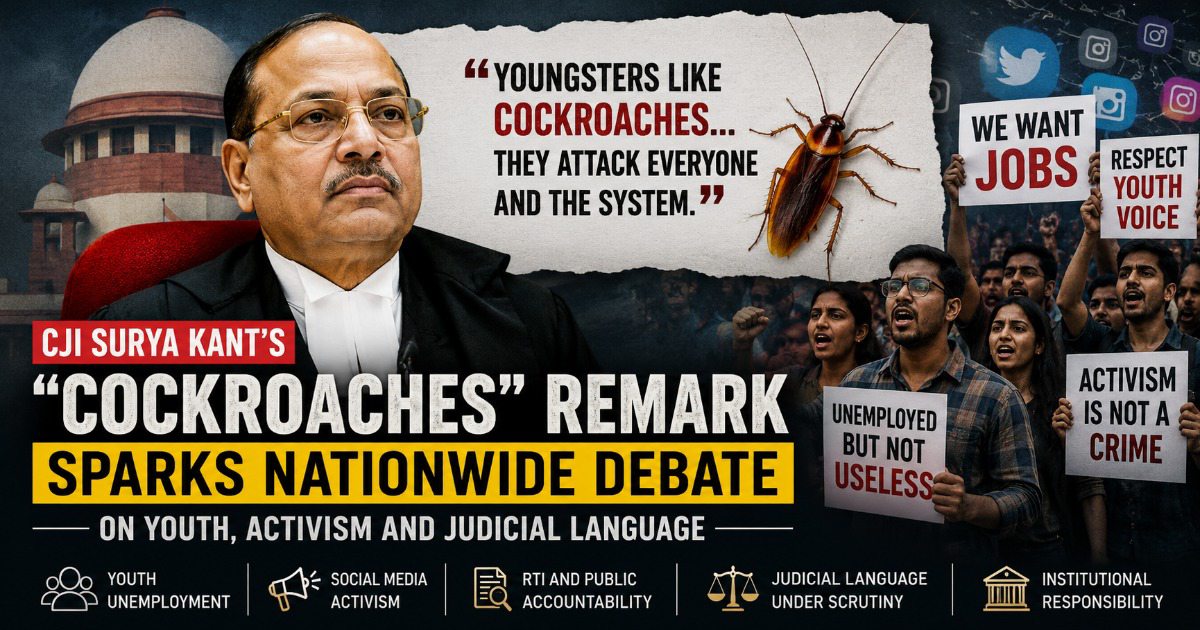
Chief Justice of India Surya Kant is facing nationwide criticism after controversial remarks comparing some unemployed youth to “cockroaches” and “parasites” during a Supreme Court hearing. The comments have triggered political reactions, social media outrage, and debate over judicial language, unemployment, activism, and institutional accountability.
CJI Surya Kant Faces Backlash Over “Cockroaches” Remark During Supreme Court Hearing
A major controversy has erupted across India after Chief Justice of India Surya Kant made strong remarks during a hearing in the Supreme Court of India, where he allegedly compared some unemployed youngsters to “cockroaches” and “parasites.”
The comments were made while a Supreme Court bench was hearing a petition linked to the designation of a senior advocate. Soon after the courtroom observations became public, social media platforms witnessed massive reactions from lawyers, activists, students, journalists, and political leaders.
Critics accused the Chief Justice of using insensitive language at a time when unemployment remains one of India’s biggest challenges. Meanwhile, supporters argued that the remarks were directed only at individuals allegedly misusing activism, social media influence, and institutional criticism for personal gain.
The controversy has now evolved into a larger national discussion about judicial responsibility, freedom of criticism, youth frustration, and the tone used by constitutional authorities in public proceedings.
What Exactly Did CJI Surya Kant Say?
During the hearing, CJI Surya Kant reportedly said:
“There are youngsters like cockroaches, who don’t get any employment or have any place in profession. Some of them become media, some become social media, RTI activists and other activists, and they start attacking everyone.”
He also referred to certain individuals as “parasites” who allegedly attack institutions and the system. The remarks were reportedly made while the court was questioning a lawyer seeking senior advocate designation and discussing professional conduct and criticism directed at the judiciary.
The comments immediately went viral online, with clips and written excerpts being widely circulated on social media platforms.
Social Media Erupts With Reactions
The remarks triggered strong reactions online, especially among unemployed youth, civil society groups, RTI activists, and digital creators.
Many users criticized the language as “deeply disrespectful” and disconnected from the realities faced by millions of educated unemployed Indians. Several social media posts pointed out that activism, journalism, RTI work, and digital commentary are legitimate democratic activities and should not be portrayed negatively.
Others defended the Chief Justice, arguing that his frustration was aimed at individuals allegedly spreading misinformation, abusing institutions, or engaging in unprofessional conduct online.
The controversy quickly became one of the top trending discussions across Indian political and legal circles.
Opposition Leaders and Activists Enter the Debate
Political leaders and activists also reacted sharply to the controversy.
Several opposition voices stated that constitutional authorities should use restrained and respectful language, especially while speaking about unemployed youth. Activists argued that unemployment is a serious socio-economic issue and that many young Indians are turning toward freelance journalism, RTI activism, and social media work because of limited formal job opportunities.
Legal commentators also questioned whether oral observations made in court should carry such strong personal language, given the influence and authority of the judiciary.
At the same time, some legal experts defended judicial freedom of expression and argued that courtroom observations are often spontaneous and context-specific.
CJI Surya Kant Issues Clarification
Following the growing backlash, CJI Surya Kant later clarified that his remarks had been “misquoted” and taken out of context by sections of the media. He stated that his criticism was specifically aimed at people entering professions using “fake and bogus degrees” and then attacking institutions irresponsibly.
According to reports, the Chief Justice said:
“It is totally baseless to suggest that I criticised the youth of our nation. I am proud of India’s youth.”
The clarification, however, has not completely ended the debate, as critics continue to question the appropriateness of the original language used in court.
Larger Questions Raised by the Controversy
The incident has now sparked wider conversations across the country on several key issues:
India’s Growing Youth Unemployment Crisis
The controversy has once again highlighted concerns over rising unemployment and lack of professional opportunities for educated youth.
Judicial Language and Responsibility
Many legal experts believe judges and constitutional authorities must maintain caution in public remarks because their words carry institutional weight.
Freedom of Criticism
The debate has also reignited discussions about whether criticism of institutions through media, RTI activism, and social platforms is being unfairly portrayed as anti-system behavior.
Social Media and Institutional Accountability
The incident reflects the growing tension between powerful institutions and the rise of digital public criticism in India.
Live Updates
May 15, 2026
CJI Surya Kant makes controversial remarks during Supreme Court hearing related to senior advocate designation.
Within Hours
Video clips and quotes from the hearing go viral across social media platforms, triggering widespread debate.
Political and Legal Reactions Begin
Opposition leaders, lawyers, activists, and journalists criticize the language used in court proceedings.
May 16–17, 2026
CJI Surya Kant issues clarification saying his remarks were “misquoted” and not aimed at unemployed youth in general.
Ongoing
Debate continues nationwide regarding judicial language, youth unemployment, media activism, and institutional criticism.
Also Read: Top 5 Government Jobs in AP & Telangana to Apply for This Week
The controversy surrounding Chief Justice Surya Kant has become much more than a courtroom dispute. It has transformed into a national conversation about unemployment, activism, free speech, judicial restraint, and public accountability in modern India.
While supporters insist the remarks were directed only at individuals allegedly misusing professional and activist spaces, critics argue that comparing struggling youth to “cockroaches” and “parasites” sends a troubling message in a country already facing severe employment challenges.
You can also read this article in Telugu (తెలుగు).
As the debate continues, the incident highlights how words spoken from constitutional positions can quickly shape national discourse far beyond the courtroom walls.
Please stay connected with us for timely and trusted updates. NewsAffair360.