
 By NewsAffair360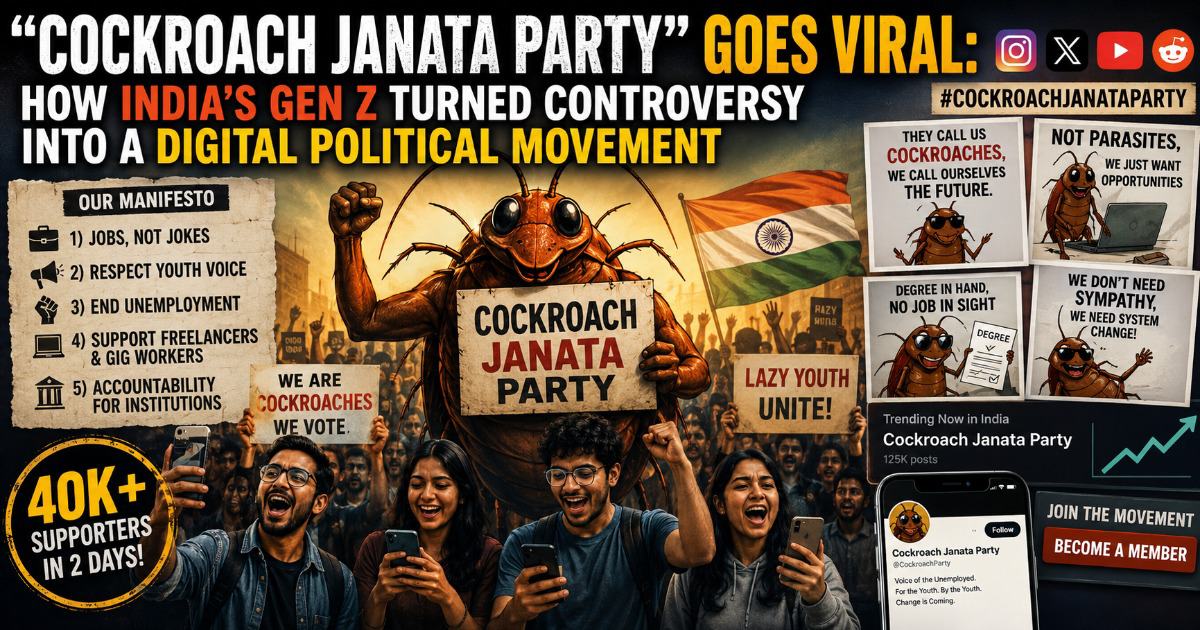
India’s Gen Z has launched a viral satirical movement called the “Cockroach Janata Party” after controversial remarks linked to CJI Surya Kant. The youth-driven online campaign exploded across social media, gaining thousands of supporters overnight and sparking national debate.
Cockroach Janata Party: The Viral Gen Z Movement That Took Over Indian Social Media Overnight
What started as outrage over a controversial courtroom remark has now transformed into one of India’s biggest viral internet movements of 2026.
A new satirical online political movement called the “Cockroach Janata Party” (CJP) has exploded across Indian social media platforms after Chief Justice of India Surya Kant allegedly compared some unemployed youth to “cockroaches” during a Supreme Court hearing.
Within just days, memes, reels, fake campaign posters, parody manifestos, and digital membership forms flooded Instagram, X, Reddit, and YouTube. What many initially dismissed as a joke quickly evolved into a symbolic online protest representing frustrated Gen Z youth struggling with unemployment, career uncertainty, and growing distrust in institutions.
How the “Cockroach Janata Party” Started
The movement reportedly began after clips and quotes from the CJI’s remarks went viral online. Many young users reacted with sarcasm and dark humor, saying:
“If unemployed youth are cockroaches, then we need our own political party.”
Soon after, social media pages using the name “Cockroach Janata Party” began appearing online. The trend rapidly gained traction, especially among students, unemployed graduates, meme creators, digital activists, freelancers, and content creators.
According to reports, the movement attracted over 40,000 online supporters within just two days.
Who Created the Movement?
Several reports have linked the viral campaign to content creator and digital commentator Abhijeet Dipke, who is being described online as one of the faces behind the movement.
Dipke reportedly described the movement as a form of “political satire mixed with youth frustration,” aimed at exposing how disconnected institutions can appear from the struggles of ordinary young Indians.
While the movement currently remains mostly digital and satirical, its rapid popularity has surprised political observers and social media analysts.
Why Gen Z Connected With It So Fast
Experts say the movement became viral because it combined three powerful elements:
Humor + Anger
The movement used memes and satire to transform an insulting label into a badge of resistance.
Youth Unemployment Frustration
Millions of graduates across India continue to face job shortages, low salaries, and unstable careers.
Social Media Culture
Gen Z increasingly uses memes, parody, and internet humor as tools for political commentary and protest.
The movement’s sarcastic slogans like:
- “Voice of the Unemployed”
- “Party of the Lazy Youth”
- “Parasites Against Corruption”
- “No Jobs, Still Voting”
became widely shared across platforms overnight.
The Manifesto That Went Viral
One of the biggest reasons behind the movement’s popularity was its humorous five-point “manifesto,” which mocked traditional political promises while highlighting real youth concerns.
The manifesto reportedly included demands related to:
- Better employment opportunities
- Fair internships and salaries
- Respect for digital creators and activists
- Accountability from institutions
- Recognition of gig workers and freelancers
Many users said the manifesto was “funny but painfully relatable.”
Political Leaders and Internet Creators React
The movement quickly attracted reactions from politicians, lawyers, journalists, YouTubers, and influencers. Reports suggest some opposition leaders and public figures even interacted with the movement online, further increasing its reach.
Meanwhile, supporters of the judiciary argued that the trend was unfairly twisting the original remarks and turning a serious legal discussion into internet comedy.
Still, the controversy only fueled more memes and online engagement.
More Than Just a Meme?
Digital culture experts believe the Cockroach Janata Party reflects a larger shift in how young Indians express political frustration.
Unlike traditional protests, Gen Z movements today often begin through reels, memes, parody accounts, and viral hashtags before becoming mainstream discussions.
Some analysts compare the trend to previous internet-driven youth movements in India that used humor and symbolism to challenge authority and attract attention.
While the Cockroach Janata Party is currently not a real registered political party, its overnight popularity has shown how quickly digital satire can influence national conversations.
Live Updates
May 15, 2026
CJI Surya Kant’s controversial “cockroach” remarks about unemployed youth go viral online.
May 16, 2026
Social media users begin creating memes and parody posts using the phrase “Cockroach Janata Party.”
May 17–18, 2026
The movement reportedly gains more than 40,000 online supporters in two days.
Viral Explosion
Instagram reels, meme pages, YouTube explainers, and parody campaign posters push the trend nationwide.
Ongoing
Debate continues over whether the movement is simply satire or the beginning of a larger youth-driven political conversation.
The sudden rise of the Cockroach Janata Party has become one of the most unexpected viral political moments in India’s digital culture this year.
What began as outrage over controversial remarks quickly evolved into a Gen Z-powered online movement mixing memes, satire, unemployment frustration, and political commentary.
You can also read this article in Telugu (తెలుగు).
Whether it remains an internet joke or grows into something larger, one thing is clear: India’s youth are increasingly using humor, social media, and digital activism to make their voices impossible to ignore.
Please stay connected with us for timely and trusted updates. NewsAffair360.