
 By NewsAffair360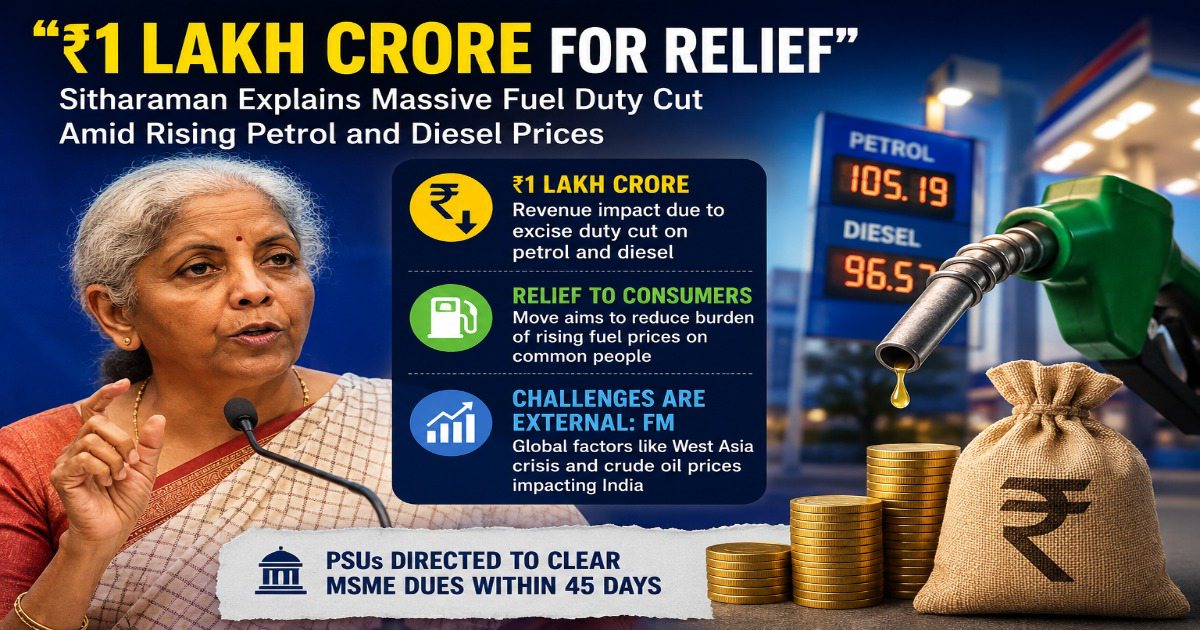
Finance Minister Nirmala Sitharaman says the Centre’s petrol and diesel excise duty cut will cost ₹1 lakh crore, aiming to provide relief to Indian families struggling with rising fuel prices and inflation.
At a time when fuel prices are putting pressure on household budgets across India, the Central government’s decision to reduce excise duty on petrol and diesel has brought a sense of relief to many citizens. Finance Minister Nirmala Sitharaman recently revealed that this decision would result in a revenue loss of nearly ₹1 lakh crore for the government.
The announcement came during the 37th Foundation Day event of Small Industries Development Bank of India in Mumbai. Sitharaman’s statement highlighted the government’s attempt to balance economic stability with the daily struggles faced by ordinary Indians dealing with inflation and rising living costs.
Why the Government Reduced Fuel Excise Duty
Petrol and diesel prices have increased multiple times in recent weeks, with fuel rates rising nearly ₹7.5 per litre since May 15. These continuous hikes have affected transportation costs, food prices, travel expenses, and small businesses across the country.
To reduce public pressure, the Centre decided to lower excise duties on fuel. This reduction directly decreases the price consumers pay at petrol pumps. While the relief may seem limited, it has a meaningful impact on middle-class families, delivery workers, farmers, taxi drivers, and small business owners who depend heavily on fuel every day.
According to Sitharaman, the government understands the financial burden citizens are facing and chose to absorb the massive revenue impact to protect consumers from further economic stress.
India’s Economic Challenges Are Mostly Global
Sitharaman Rejects “Negative Narrative”
During her speech, Sitharaman also addressed concerns about the Indian economy. She stated that many of India’s current financial difficulties are linked to global issues rather than domestic failures.
The ongoing crisis in West Asia, rising crude oil prices, global inflation, and international supply chain disruptions have affected economies around the world. India, being one of the largest importers of crude oil, has naturally faced challenges because of these global developments.
However, Sitharaman pushed back against what she described as a “pessimistic narrative” around India’s economic condition. She emphasized that India continues to remain stable despite worldwide uncertainty and is still focusing on infrastructure, manufacturing, employment, and economic growth.
Fuel Prices Continue to Affect Common People
Everyday Expenses Are Rising
For ordinary citizens, fuel price hikes affect much more than transportation. Higher petrol and diesel costs increase the price of vegetables, groceries, delivery services, public transport, and other daily essentials.
Families across the country are carefully managing their monthly budgets as inflation continues to impact savings and spending. Small businesses are also struggling with higher operational costs, especially those involved in transportation and logistics.
Economic experts believe that reducing fuel taxes can help slow inflation slightly and provide temporary support to consumers already facing financial pressure.
Sitharaman Directs PSUs to Clear MSME Payments
One of the strongest messages from the Finance Minister was directed toward Public Sector Units (PSUs). Sitharaman instructed them to clear pending dues of MSMEs within 45 days.
Micro, Small, and Medium Enterprises are considered the backbone of India’s economy. Delayed payments often create serious cash flow problems for these businesses, making it difficult to pay salaries, manage operations, and survive during difficult periods.
Also Read: This Week in AP & Telangana: Top 5 News Stories You Shouldn’t Miss
The government’s push for faster payments is expected to provide relief to thousands of small business owners across India.
You can also read this article in Telugu (తెలుగు).
The government’s decision to reduce petrol and diesel excise duty may cost ₹1 lakh crore, but for millions of Indians, it represents an important attempt to ease financial stress during uncertain economic times. As fuel prices continue to influence every part of daily life, citizens will closely watch how the government balances public relief with economic stability in the coming months.
Please stay connected with us for timely and trusted updates. NewsAffair360.