
 By NewsAffair360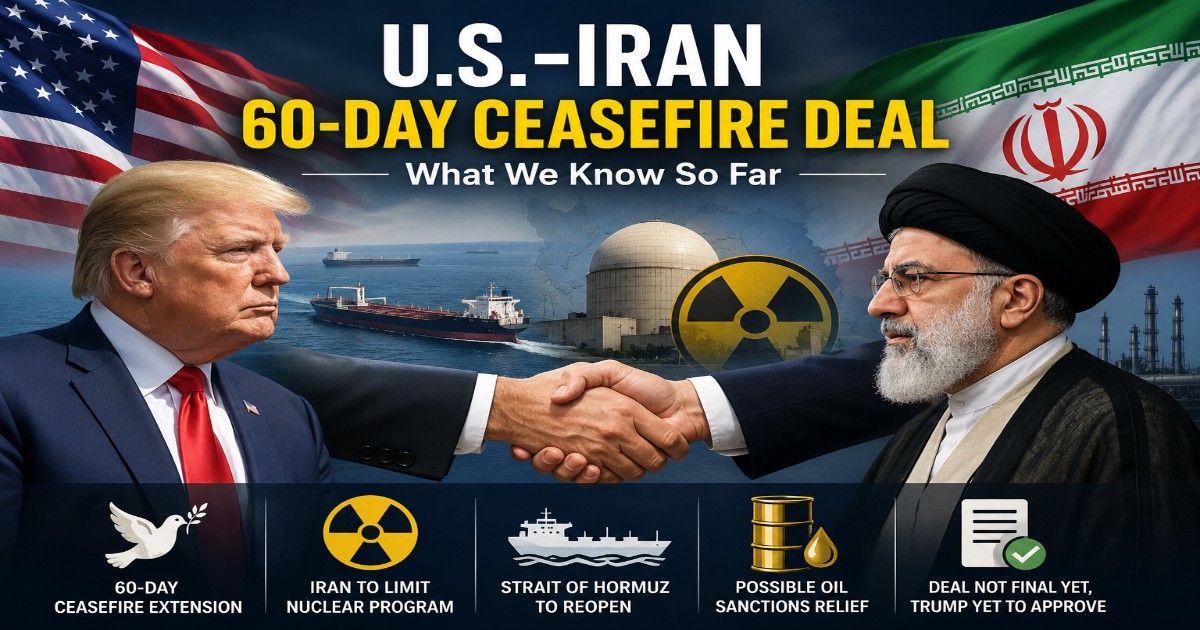
The United States and Iran have reportedly agreed on a 60-day ceasefire extension to continue peace talks and discuss Iran’s nuclear program. However, President Donald Trump has not yet approved the deal.
A possible breakthrough has emerged in the ongoing tensions between the United States and Iran. Reports suggest that both countries have reached a preliminary agreement to extend their current ceasefire for another 60 days. The proposed deal is aimed at creating space for formal negotiations and reducing the risk of further conflict in the Middle East.
While the agreement has been discussed by officials from both sides, U.S. President Donald Trump has not yet given his final approval. If approved, this could become one of the most important diplomatic developments since the conflict intensified earlier this year.
A Temporary 60-Day Truce to Continue Talks
According to reports, U.S. and Iranian negotiators have agreed on a memorandum of understanding (MoU) that would extend the ceasefire for 60 days. The goal is to allow both sides enough time to hold detailed discussions on major issues, including Iran’s nuclear activities and regional security concerns.
Officials involved in the talks say the agreement is still awaiting approval from both governments, especially from President Trump, who has been reviewing the proposal with his national security team.
Iran’s Nuclear Program at the Center of Negotiations
One of the biggest points in the proposed agreement is Iran’s commitment not to pursue nuclear weapons. Discussions are also focused on Iran’s stockpile of highly enriched uranium.
The International Atomic Energy Agency (IAEA) estimates that Iran currently possesses around 440 kilograms of uranium enriched to 60% purity. Experts say this level is only a short step away from weapons-grade material. Under the proposed framework, part of this uranium could be diluted, while another portion may be transferred to a third country, possibly Russia. However, the final method is still under discussion.
Strait of Hormuz Could Reopen
Another major part of the proposed deal involves the Strait of Hormuz, one of the world’s most important oil shipping routes.
The waterway has faced disruptions since the conflict escalated, affecting global oil supplies and causing energy prices to rise. Reports indicate that the United States may ease restrictions and lift parts of its blockade, while Iran would remove mines and allow unrestricted commercial shipping through the strait.
The reopening of the route could bring relief to global markets, as nearly one-fifth of the world’s oil trade normally passes through the Strait of Hormuz.
Possible Relief on Oil Sanctions
The proposed agreement could also provide economic relief for Iran.
Sources familiar with the negotiations say the United States may allow Iran to export oil through sanctions waivers. Discussions are also expected regarding the release of frozen Iranian assets and broader sanctions relief during the 60-day negotiation period.
Oil prices have risen sharply since the conflict began, making energy costs more expensive across many countries. A successful agreement could help stabilize global oil markets.
Iran Says No Final Agreement Yet
Despite reports that a framework has been reached, Iranian officials have pushed back against claims that the deal is complete.
Iranian media outlets, including Tasnim News Agency, reported that the text of the agreement has not yet been finalized. Iranian negotiators reportedly stated that discussions are still ongoing and that any announcement will only come after all details are confirmed.
This difference in messaging shows that important issues still remain unresolved between the two sides.
Will Donald Trump Approve the Deal?
The biggest question now is whether President Donald Trump will approve the agreement.
Speaking to reporters at the White House, Trump said Iran wants a deal but added that the United States is not fully satisfied with the current terms. He stated that his administration would continue pushing for stronger guarantees regarding Iran’s nuclear activities before making a final decision.
At the same time, the U.S. government has announced new sanctions targeting Iran’s military-linked oil trade, showing that pressure on Tehran continues even while negotiations are taking place.
The proposed 60-day ceasefire extension offers a rare opportunity for diplomacy after months of conflict and uncertainty. While the agreement could help reduce tensions, reopen critical trade routes, and restart serious nuclear talks, several major hurdles remain.
You can also read this article in Telugu (తెలుగు).
With Iran saying the deal is not yet finalized and President Trump still reviewing the proposal, the coming days will be crucial. The world is now watching closely to see whether this temporary truce can become the first step toward a more lasting peace in the region.
Key Points
- The U.S. and Iran have reportedly agreed on a draft 60-day ceasefire extension.
- President Donald Trump has not yet approved the agreement.
- Iran may commit to limiting its nuclear program and addressing its enriched uranium stockpile.
- The Strait of Hormuz could reopen for unrestricted commercial shipping.
- The U.S. may provide sanctions relief and allow Iranian oil exports through waivers.
- Iranian officials insist the agreement is not yet finalized.
- New U.S. sanctions on Iran have been announced even as negotiations continue.
Please stay connected with us for timely and trusted updates. NewsAffair360.