
 NewsAffair360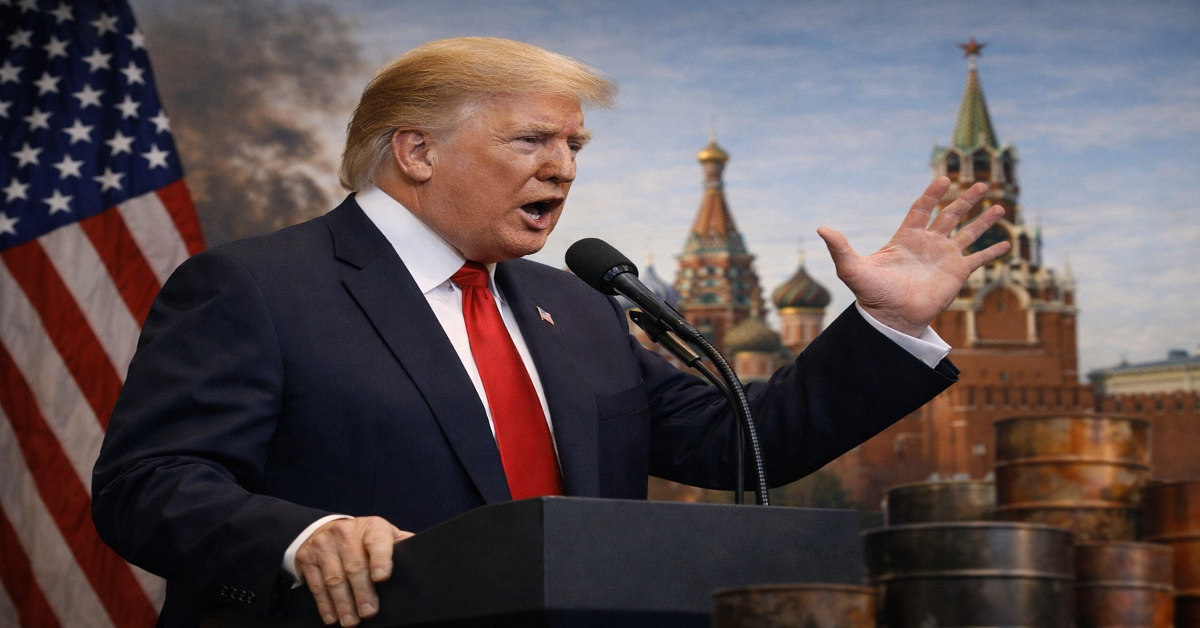
U.S. President Donald Trump has claimed that India scaled back its imports of Russian crude oil in recent months largely to appease him and safeguard trade ties with Washington. According to Trump, New Delhi was well aware of his dissatisfaction with India’s continued energy purchases from Russia and adjusted its approach to avoid strain in India–U.S. economic relations.
Trade leverage and political messaging
Trump linked India’s alleged move directly to trade considerations, suggesting that U.S. leadership could rapidly impose tariffs that would hurt India’s economy. He argued that this understanding influenced India’s oil-buying decisions.
Praise for Prime Minister Modi
While outlining his claim, Trump spoke positively about Narendra Modi, calling him a “good man” who understands the economic consequences of U.S. trade actions. Trump implied that the prospect of swift tariff hikes made India act with caution.
Senator Graham echoes the claim
Backing Trump’s narrative, U.S. Senator Lindsey Graham said India’s Ambassador to the U.S., Vinay Kwatra, had informed him that India was indeed reducing oil imports from Russia. Graham added that Kwatra requested him to approach Trump about easing a 25% penalty tariff, imposed on top of existing reciprocal duties.
Diplomatic setting of the discussion
Although no specific date was mentioned, the conversation reportedly took place during a formal diplomatic interaction on December 2 at the Indian Embassy in Washington. The meeting hosted a bipartisan U.S. Senate delegation, including Graham and Richard Blumenthal, underscoring that the issue was raised in an official setting.
India’s earlier position on sanctions
In past statements, India’s Ministry of External Affairs has criticised unilateral U.S. sanctions, calling them examples of “double standards.” New Delhi has pointed out that the U.S. itself continues limited trade with Russia in areas such as oil, uranium, and critical minerals, even as it urges other countries to halt such dealings.
Sanctions bill and tariff threats
Graham and Blumenthal are also leading sponsors of a Russia sanctions bill in the U.S. Senate that proposes tariffs of up to 500% on nations that keep purchasing Russian oil or uranium. If enacted, the measure would dramatically intensify economic pressure on countries maintaining energy ties with Moscow.
No official confirmation from India
Trump has repeatedly asserted that India promised to completely end Russian oil imports. However, Indian authorities have not confirmed any such commitment, and the Ministry of External Affairs has declined to comment on the latest claims by U.S. leaders.
The episode highlights the complex intersection of energy security, sanctions, and trade diplomacy. While the U.S. appears to be leveraging tariffs and sanctions to influence India’s energy choices, India continues to tread carefully—balancing geopolitical pressure with its own economic and strategic interests.
You can also read this article in Telugu (తెలుగు).
Please stay connected with us for timely and trusted updates. NewsAffair360